Feeding frozen-thawed rodents is one of the safest, most convenient and widely used ways to feed captive snakes. Frozen rodents are easy to store, readily available in a variety of sizes, and eliminate many of the risks associated with feeding live prey.
However, proper thawing, warming and handling are essential to ensure your snake receives a safe and nutritious meal.
At Ultimate Exotics, we recommend following the steps below whenever preparing a frozen rodent for your snake.
1. Choose the Correct Rodent Size
The first step is selecting an appropriately sized feeder rodent.
As a general guideline, the prey item should be approximately the same width as the snake’s body at its widest point, although feeding requirements vary between species, age and individual snakes.
Young snakes generally require smaller prey more frequently, while adult snakes may require larger prey at longer intervals.
Never choose prey simply because it looks large enough. Your snake’s species, age, body condition and feeding history should all be considered.
If you’re unsure what size rodent your snake requires, speak to an experienced reptile keeper or veterinarian.
2. Remove the Rodent From the Freezer
Remove only the number of rodents you intend to feed.
Keep the remaining frozen rodents completely frozen and return them to the freezer as soon as possible.
Do not repeatedly thaw and refreeze rodents, as this can compromise their quality and increase the risk of bacterial growth.
It is best to thaw rodents in a separate container or sealed bag rather than allowing them to come into contact with food or surfaces used for human food preparation.
3. Thaw the Rodent Completely
The safest method is to allow the rodent to thaw gradually in the refrigerator or at room temperature.
Place the frozen rodent inside a sealed leak-proof bag or container and allow it to thaw completely.
Depending on its size, this can take several hours or overnight.
Never feed a partially frozen rodent.
A rodent may feel soft on the outside while still being frozen internally, particularly with larger prey items. Make sure it is completely thawed before proceeding.
Never microwave a feeder rodent
Microwaving is not recommended because it can create extremely hot areas within the rodent and may cause tissue to cook or rupture.
4. Warm the Rodent Before Feeding
Once the rodent has completely thawed, it should be warmed before offering it to your snake.
Place the thawed rodent, still inside a sealed waterproof bag, into warm water.
The goal is to bring the prey item to a temperature that resembles recently deceased prey.
Do not use boiling or excessively hot water.
The water should be comfortably warm rather than scalding, and you can refresh the water as necessary until the rodent reaches an appropriate feeding temperature.
For larger rodents, allow additional time for the heat to penetrate all the way through.
A hairdryer can also be used to give your thawed rodent some extra heat before offering it to your snake.
Always check the temperature before offering the rodent.
5. Prepare a Safe Feeding Area
Feed your snake in its normal enclosure unless you have a specific reason to use another feeding area.
Moving a snake unnecessarily before or after feeding can create additional stress.
Make sure the enclosure is secure and that there are no other animals, children or unnecessary disturbances around while the snake is feeding.
6. Use Feeding Tongs
Always use long feeding tongs or forceps when offering a frozen-thawed rodent.
Never hold the rodent with your bare hands while feeding.
Grasp the rodent securely and present it to the snake.
A gentle movement of the rodent can help simulate natural prey movement and attract the snake’s attention.
Avoid excessive movement or teasing the snake.
7. Allow Your Snake to Strike and Constrict Naturally
Once the snake shows interest, allow it to strike and take hold of the prey.
Do not force the rodent into the snake’s mouth.
Once the snake has taken the rodent, release it from the tongs and allow the snake to consume the meal undisturbed.
Some snakes will strike immediately, while others may require a little more patience.
This is particularly common with snakes that are settling into a new enclosure or are naturally less enthusiastic feeders.
8. Allow Your Snake Time to Swallow
Once your snake has started swallowing, avoid disturbing it.
Do not touch, move or handle the snake while it is eating.
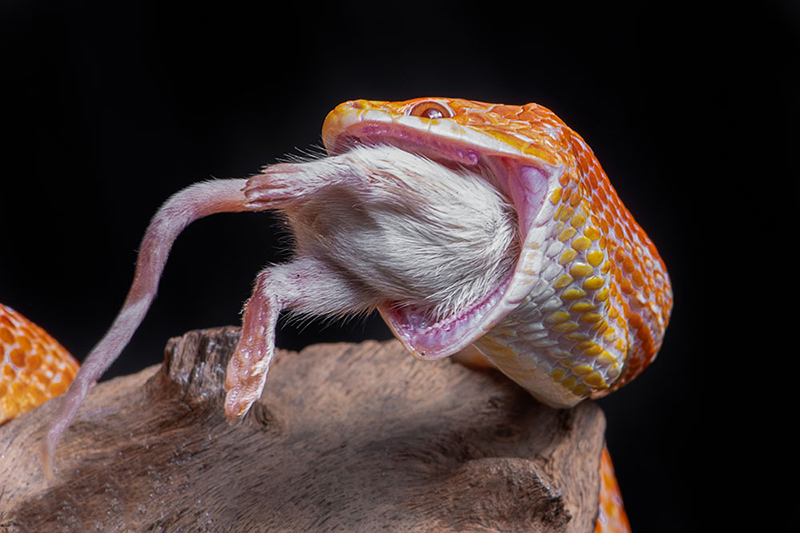
The snake’s jaws are specially adapted to allow it to consume prey considerably wider than its head, so it is completely normal for feeding to look unusual.
Allow your snake to finish the meal at its own pace.
9. Clean Up Safely
Once feeding is complete, remove the feeding equipment and clean and disinfect any surfaces that have come into contact with the rodent.
Wash your hands thoroughly with soap and water after handling frozen-thawed rodents, feeding equipment or anything contaminated during feeding.
Good hygiene is particularly important because raw animal products can carry bacteria.
10. Give Your Snake Time to Digest
One of the most important rules after feeding is:
Leave your snake alone!
Avoid handling your snake immediately after it has eaten.
Give it adequate time to digest its meal and avoid unnecessary disturbance.
Handling too soon after feeding can cause stress and may increase the chance of the snake regurgitating its meal.
The exact digestion period varies according to species, prey size and enclosure temperature.
What If My Snake Doesn’t Eat?
Don’t panic if your snake occasionally refuses a meal.
Snakes can naturally go through periods where they eat less or refuse food altogether. Seasonal changes, breeding behaviour, stress, environmental conditions, illness and incorrect temperatures can all affect feeding behaviour.
First check:
- Is the enclosure temperature correct for the species?
- Is the snake otherwise healthy and active?
- Is the prey an appropriate size?
- Was the rodent completely thawed and warmed?
- Has the snake recently been handled or stressed?
- Is the snake approaching a shed?
- Is the snake experiencing seasonal or breeding-related changes?
Never leave a thawed rodent inside the enclosure for an extended period.
If your snake repeatedly refuses food or shows other signs of illness, consult a qualified reptile veterinarian.
Important Frozen Rodent Safety Tips
DO:
- Keep frozen rodents properly frozen until required.
- Thaw rodents completely before feeding.
- Warm the rodent in warm water before offering it.
- Use feeding tongs.
- Wash your hands after handling rodents.
- Clean feeding equipment after use.
- Store frozen rodents separately from human food where possible.
- Keep your freezer at an appropriate food-safe temperature.
DON’T:
- Feed a partially frozen rodent.
- Microwave feeder rodents.
- Refreeze a rodent that has already been completely thawed.
- Handle your snake unnecessarily while it is feeding.
- Leave a thawed rodent sitting in a warm enclosure for an extended period.
- Allow thawing water or raw rodent material to contaminate food-preparation surfaces.
Why Choose Frozen-Thawed Rodents?
Frozen-thawed feeding has become extremely popular among snake keepers because it is convenient, consistent and removes the need to maintain live feeder animals. In some countries such as South Africa feeding live rodents to snakes in captivity is prohibited by the SPCA unless reasons can be proved otherwise. For example there are a few rare cases where some individual snakes will refuse to eat a frozen thawed rodents and will only accept live prey.
It also allows keepers to purchase rodents in advance and store them safely until they are required.
At Ultimate Exotics, we take pride in supplying quality feeder rodents to reptile keepers, breeders and reptile enthusiasts.
Whether you are feeding your first baby snake or maintaining a collection of adult snakes, proper preparation and safe handling of feeder rodents are an important part of responsible reptile care.
Feed safely. Feed responsibly. Keep your reptiles thriving.
Ultimate Exotics — Quality Reptile Products & Feeder Foods.